Sensor GraticuleTechnical Specifications & Thermal Imager Comparisons
AXIS: OPTICAL SPECIFICATION AUDITCROSS-BORDER SENSOR VERIFICATION

Thermal Sensor Specification Deconstruction & Diagnostic Evaluation

An objective technical reference dissecting published microbolometer specifications, native versus interpolated thermal resolutions, declared thermal sensitivity (NETD), and radiometric file portability across budget thermal inspection instruments.

CORE METRICNative Array vs. Display Interpolation

Differentiating physical microbolometer sensor pixels from upscaled LCD panel outputs across listing documentation.

SENSITIVITY FLOORDeclared NETD (mK) Standards

Evaluating published Noise Equivalent Temperature Difference metrics for subtle thermal delta detection.

Auditing Handheld Thermal Cameras for PCB Diagnostics Auditing Handheld Thermal Cameras for PCB Diagnostics Auditing Handheld Thermal Cameras for PCB Diagnostics
SIGNATURE MODULE

Specification Verification Protocol & Decision Criteria

Critical hardware parameters to isolate in supplier documentation before evaluating thermal diagnostic suitability.

CRITERION 01

Native Sensor Array Dimensions

ความละเอียดเซนเซอร์แท้ (Native Microbolometer Resolution)

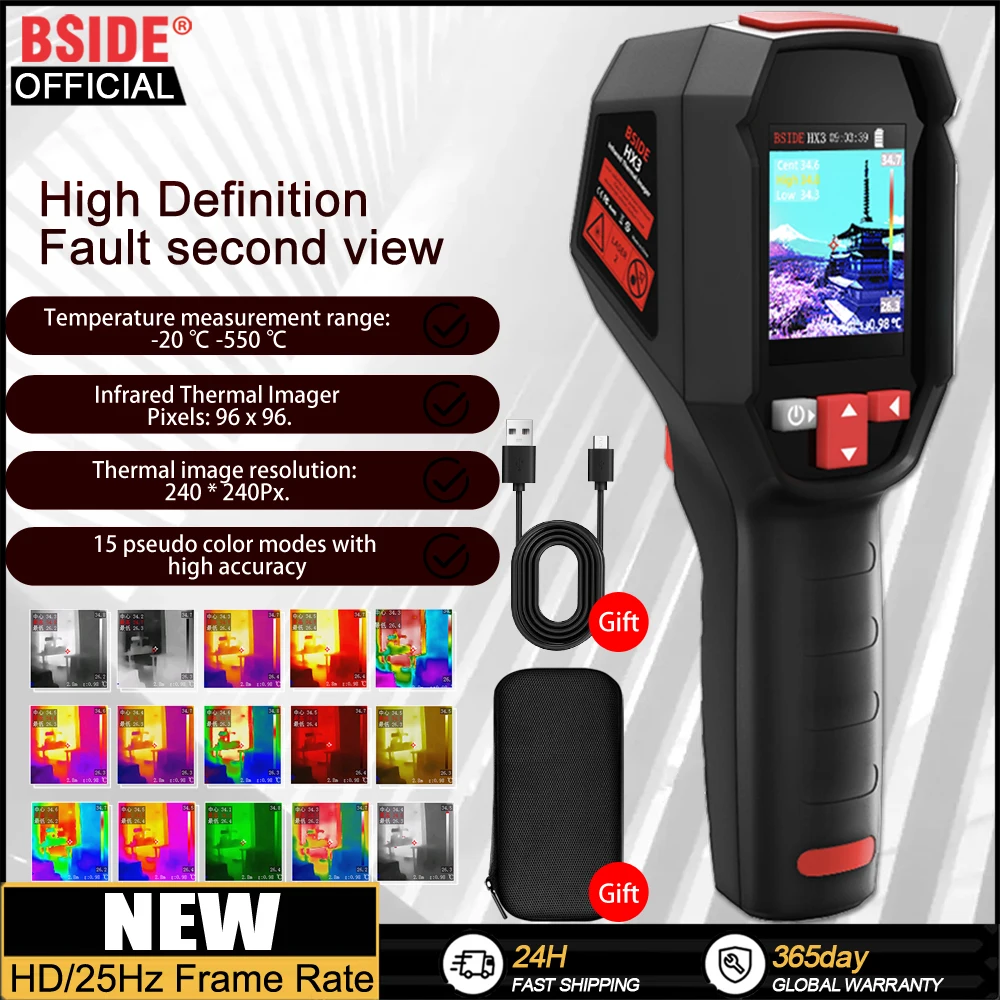
Distinguish between the true physical sensor grid and display-level interpolation. Budget devices frequently advertise screen pixel counts rather than the microbolometer matrix. A true 256x192 sensor yields four times the thermal data of an interpolated 160x120 array.

DOCUMENTATION CHECKVerify sensor resolution in the companion app specifications or sensor specsheet, not primary promotional titles.
CRITERION 02

Thermal Sensitivity & Noise (NETD)

ค่าความไวต่อความร้อน (NETD in Millikelvins)

Examine the Noise Equivalent Temperature Difference rating. Lower millikelvin figures represent superior thermal contrast for resolving minute temperature gradients across insulation defects or printed circuit boards.

THRESHOLD TARGETSub-50mK declared ratings indicate suitable sensitivity for building envelope auditing and fine thermal tracing.
CRITERION 03

Refresh Frequency & Radiometry

อัตราการรีเฟรชและการส่งออกข้อมูลความร้อน (Refresh Rate & Export)

Check whether frame rates operate at fluid diagnostic levels or standard restricted 9Hz caps. Confirm whether software outputs raw radiometric files (CSV or radiometric JPEG) allowing post-capture point-by-point temperature adjustments.

COMPATIBILITY NOTEStandard 9Hz units are sufficient for static thermal audits but introduce motion blur during rapid mechanical scanning.
DIAGNOSTIC PATHWAYS

Application-Driven Inspection Workflows

Targeting sensor configurations to distinct maintenance, electrical, and structural inspection disciplines.

DISCIPLINE A

Micro-Electronics & PCB Diagnosis

Focuses on macro lens compatibility, tight minimum focal distances, and high native pixel counts necessary to isolate shorted surface-mount capacitors and overheating integrated circuits.

  • Macro lens attachment availability
  • Adjustable emissivity settings down to 0.01 increments
  • High-density native array recommendation
DISCIPLINE B

HVAC & Building Envelope Auditing

Addresses wide field-of-view requirements, extended temperature spans, and sensitive NETD figures suited for detecting thermal bridging, moisture infiltration, and duct leakage.

  • Wide field of view (FOV > 45 degrees)
  • Sensitive thermal threshold (NETD < 50mK)
  • Standalone ergonomic housing with screen
DISCIPLINE C

Smartphone Dongles & Mobile Field Service

Analyzes direct USB-C and Lightning mobile modules where host device battery life, app stability, and companion software data export balance against ultra-compact form factors.

  • Direct radiometric CSV data export
  • USB-C direct physical clearance and connector stability
  • App compatibility across modern mobile OS releases

Recent Articles

This site contains affiliate links. We may earn a commission at no extra cost to you.